Introduction to Sciatica & Importance of a Multidisciplinary Approach
Introduction to Sciatica
Sciatica, often perceived as simple back pain, is actually a complex symptom of an underlying condition affecting the sciatic nerve, the longest and widest nerve in the human body. This neurological condition, characterized by radiating pain that extends from the lower back to the legs, has garnered increasing interest in the medical field due to its high incidence and notable impact on individuals’ quality of life. The origins of sciatica are varied, including causes such as disc herniation, spinal stenosis, and lifestyle factors such as sedentary behavior or obesity. It is essential to recognize that sciatica is not a disease in itself, but rather a sign of a deeper problem that requires thorough medical evaluation for an accurate diagnosis, paving the way for a targeted and effective treatment plan.
Causes of Sciatica
Sciatica is a painful symptom resulting from irritation or compression of the sciatic nerve, the longest nerve in the body, which extends from the lumbar spine to the feet. Several conditions can cause this compression or irritation, leading to the characteristic pain of sciatica that radiates along the nerve pathway. Understanding the underlying causes is essential for targeting treatment and preventing recurrences.
Herniated Disc: The most common cause of sciatica is herniated disc in the lumbar spine. When an intervertebral disc shifts or ruptures, it can press on the sciatic nerve, causing intense pain.
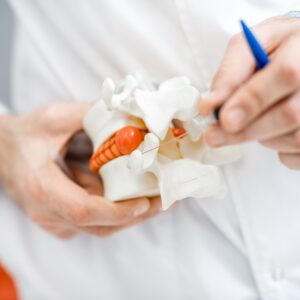
The most frequent cause of sciatica is lumbar disc herniation. This condition occurs when the gel-like nucleus inside an intervertebral disc shifts or bulges through a tear in the outer fibrous ring of the disc, putting pressure on the sciatic nerve or one of its nerve roots. Compression or irritation of this nerve can lead to sciatic pain, characterized by pain radiating from the lower back to the back of the leg, and sometimes down to the foot. This pain may be accompanied by symptoms such as numbness, tingling, or muscle weakness along the sciatic nerve pathway.
Lumbar disc herniation is more likely to occur in certain situations, such as when lifting heavy objects, making a sudden movement or twisting, or due to the natural wear and tear of intervertebral discs with age. Risk factors include aging, being overweight, a sedentary lifestyle, and certain professions or activities that exert excessive pressure on the spine.
Spinal Stenosis: The reduction of space in the spinal canal, known as spinal stenosis, can also compress the sciatic nerve, particularly in older individuals, as the structures of the spine degenerate with age.
The second most common cause of sciatica, after lumbar disc herniation, is lumbar spinal stenosis. Spinal stenosis is characterized by a narrowing of the space in the spinal canal or in the openings through which the nerve roots exit the spine. This narrowing can put pressure on the nerve roots of the sciatic nerve, resulting in sciatica symptoms.
Lumbar spinal stenosis is primarily caused by degenerative changes in the spine that occur with aging. These changes may include thickening of the spinal ligaments, formation of bone spurs (osteophytes), or compression of intervertebral discs. Although spinal stenosis can occur in any part of the spine, it most often affects the lumbar region (lower back), where it can impact the nerve roots leading to the sciatic nerve.
Symptoms of lumbar spinal stenosis may vary, but often include pain in the lower back that radiates to the buttocks and legs, numbness, tingling, muscle weakness, and in some cases, difficulty walking or standing for long periods. The pain may worsen with walking or standing and may improve when sitting or leaning forward, which can help distinguish spinal stenosis from other causes of lower back pain or sciatica.
Spondylolisthesis: This condition occurs when one of the vertebrae slips forward relative to another, creating nerve compression that can radiate pain along the sciatic nerve.
Piriformis Muscle Syndrome: While less common, piriformis muscle syndrome occurs when the piriformis muscle, located in the buttock, irritates or compresses the sciatic nerve.
Piriformis muscle syndrome is a condition where the piriformis muscle, located in the buttock region, compresses or irritates the sciatic nerve, causing pain similar to that of sciatica. Although this syndrome can cause significant pain and affect quality of life, treating it as the primary cause of sciatica without thorough evaluation can prove to be a poor idea for several reasons, including its very low prevalence compared to other causes of sciatica.
Low prevalence: Piriformis muscle syndrome is relatively rare compared to other causes of sciatica, such as herniated discs or spinal stenosis. Focusing on treating this syndrome without ruling out other more common causes can lead to misdiagnosis and, consequently, inappropriate treatment that does not address the true source of pain.
Difficult diagnosis: Diagnosing piriformis muscle syndrome is complex and often requires the exclusion of other conditions. Without accurate diagnostic evaluation, including medical imaging and, in some cases, electrodiagnostic tests, it is difficult to confirm that piriformis muscle syndrome is the cause of sciatica. Treating this syndrome without a clear diagnosis may delay access to more appropriate interventions for the underlying causes of pain.
Risk of overtreatment: Focusing on treating piriformis muscle syndrome may lead to overtreatment, including the use of invasive techniques such as injections or surgery that may not be necessary if the cause of sciatica is different. This exposes patients to unnecessary risks and potential complications without guaranteed relief.
Neglecting effective conservative treatments: By emphasizing a rare cause of sciatica, there is a risk of neglecting or underutilizing conservative treatments that have proven effective in managing more common origins of sciatica. Approaches such as physical therapy, strengthening and stretching exercises, and lifestyle modifications can provide significant relief without the risks associated with more invasive treatments.
Delay in appropriate management: Finally, focusing on piriformis muscle syndrome may delay appropriate management for patients suffering from sciatica due to more common and potentially serious causes. This can prolong the period of pain and discomfort for the patient and, in some cases, worsen the underlying condition.
In summary, while piriformis muscle syndrome is a valid and painful condition for some patients, treating it as the primary cause of sciatica without a comprehensive and accurate evaluation can lead to misdiagnosis, inappropriate treatment, and delays in symptom resolution. A methodical and evidence-based approach is essential to identify the true cause of sciatica and provide the most effective and safest treatment.
Traumas: Injuries or traumas to the lumbar spine or pelvis can lead to inflammation or direct compression of the sciatic nerve.
Lifestyle Factors: Obesity, wearing high heels, sedentary lifestyle, or inappropriate postures for long periods can increase the risk of developing sciatica by exerting additional pressure on the spine and the sciatic nerve.
Developmental Diseases: Certain conditions, such as degenerative disc diseases or congenital spinal anomalies, can also be at the root of sciatica.
Identifying the exact cause of sciatica is crucial for determining the most appropriate treatment. This may require a series of diagnostic tests, including magnetic resonance imaging (MRI) to obtain a detailed view of the structures of the spine and the sciatic nerve. Once the cause is identified, a personalized treatment plan can be developed, ranging from conservative pain management to more invasive interventions if necessary.
What about double sciatica?
Double sciatica, where both legs are affected by sciatic pain, can be due to several causes, often related to conditions that exert bilateral pressure on the nerve roots on both sides of the spine. Among the probable causes are:
Massive central disc herniation: A disc herniation that occurs in the center of the spine can push against the dura mater containing the nerve roots of the spinal cord, potentially affecting the sciatic nerves on both sides.
Severe spinal stenosis: Spinal stenosis, especially when severe and generalized, can narrow the spinal canal to such an extent that it compresses the nerve roots on both sides, causing bilateral sciatica.
Spondylolisthesis: If the vertebral slippage is significant enough or occurs at multiple levels, it can lead to bilateral nerve compression.
Spinal tumors: Tumors that develop centrally in the spine or affect the nerve structures on both sides simultaneously can cause sciatica in both legs.
Degenerative disc diseases at multiple levels: Degeneration of intervertebral discs at multiple levels of the spine can lead to pressure on the nerve roots on each side.
Spinal injuries or traumas: Injuries affecting the spine as a whole, such as falls or car accidents, can cause inflammation or compression of the sciatic nerves on both sides.
Infections or inflammations: Certain conditions, such as spondylodiscitis (infection of the intervertebral discs) or generalized inflammatory processes, can affect the nerve structures on both sides of the spine.
The presence of bilateral sciatica often indicates a more serious pathology that requires thorough medical evaluation. Accurate diagnosis is crucial for determining the underlying cause and developing an effective treatment plan. Patients presenting symptoms of double sciatica should consult a healthcare professional for appropriate evaluation and diagnosis.
Importance of a Multidisciplinary Approach
Given the complexity of sciatica, a multidisciplinary approach proves essential for adequate management. This strategy involves comprehensive evaluation by a team of experienced healthcare professionals capable of identifying the multiple facets of this condition. Medical imaging tests, such as X-rays or MRIs, play a crucial role in this process, allowing for accurate visualization of the state of the spine and the sciatic nerve. Functional and neurological assessments complement this diagnostic approach, providing an overview of the impacts of sciatica on the patient. Treatment for this condition often spans a longer time frame, combining various therapies and lifestyle adjustments to relieve symptoms and address the underlying cause, emphasizing the importance of a personalized and integrated approach.
Treatment of Sciatica with Neurovertebral Decompression & Diagnosis of Sciatica
Treatment of Sciatica with Neurovertebral Decompression
Neurovertebral decompression stands as a significant advancement in the non-invasive treatment of sciatica. This method uses a specialized device to apply controlled traction to the spine, creating space between the vertebrae and thereby reducing pressure on the intervertebral discs and the sciatic nerve. This relief of pressure can significantly diminish the irritation and inflammation associated with sciatica, offering patients a promising alternative to surgical interventions. Neurovertebral decompression is particularly effective for cases of sciatica caused by disc herniations, disc bulges, or spinal stenosis, providing lasting pain relief and improved mobility for many patients.
Diagnosis of Sciatica
Accurate diagnosis of sciatica is crucial for determining the most appropriate treatment. Typical symptoms include radiating pain from the lower back to the leg, often accompanied by numbness, tingling, or muscle weakness along the sciatic nerve pathway. To confirm the presence of sciatica and identify its underlying cause, healthcare professionals rely on a combination of thorough physical examination and medical imaging tests. MRI is particularly useful for visualizing the structures of the spine and the sciatic nerve, allowing for detection of disc herniations, spinal stenosis, or other abnormalities that may compress the sciatic nerve. Mobility tests and, in some cases, an electromyogram (EMG) may also be performed to assess the functional impact of sciatica on the patient.
Difference between Sciatica and Cruralgia
Sciatica and cruralgia are two terms that describe nerve pain but differ in their location and the underlying cause of the pain. Understanding these differences is essential for accurate diagnosis and appropriate treatment.
Sciatica: Sciatica refers to pain following the pathway of the sciatic nerve, the longest and widest nerve in the human body, which extends from the lower back to the feet. This pain is often caused by compression or irritation of the sciatic nerve. Typical symptoms include radiating pain that may be felt in the lower back, buttock, back of the thigh, and along the leg.
Cruralgia: Cruralgia, on the other hand, pertains to pain related to the crural (or femoral) nerve, which innervates the front of the thigh. Cruralgia is generally the result of compression or irritation of this nerve in the spine, leading to pain that spreads from the lower back or hip to the front of the thigh, potentially reaching the knee and sometimes the shin.
The main difference between these two conditions lies in the location of the pain and the affected nerve. While sciatica affects the path of the sciatic nerve along the back of the leg, cruralgia affects the path of the crural nerve at the front of the thigh. This distinction is crucial for treatment, as pain management strategies and therapeutic interventions may vary significantly based on the specific condition.
For patients suffering from nerve pain, it is important to consult a healthcare professional who can perform the necessary diagnostics to determine whether the symptoms are due to sciatica or cruralgia. Based on this diagnosis, a personalized treatment plan can be developed, which may include conservative methods, neurovertebral decompression treatments, or other therapeutic approaches tailored to the patient’s specific condition.
Understanding these differences highlights the importance of precise evaluation and a targeted approach in the treatment of nerve pain, ensuring that patients receive the most appropriate care for their specific needs.
Treatment Options for Sciatica & Treatment Choices and Synergy of Methods
Treatment Options for Sciatica
Treatment for sciatica varies greatly depending on the underlying cause and the severity of the symptoms. Conservative treatment options, such as non-steroidal anti-inflammatory drugs (NSAIDs) and muscle relaxants, are often the first line of defense, aiming to reduce inflammation and alleviate pain. For more persistent or severe cases, epidural corticosteroid injections may be considered to provide temporary relief. Neurovertebral decompression, a non-invasive method, offers a promising alternative to relieve pressure on the sciatic nerve without resorting to surgery. In situations where sciatic pain is debilitating and does not respond to conservative treatments, surgical interventions such as microdiscectomy or laminectomy may be necessary to relieve the source of nerve compression.
Treatment Choices and Synergy of Methods
The choice of treatment for sciatica should be personalized, taking into account the specifics of each patient, including the cause of sciatica, pain intensity, and the impact on quality of life. A multidisciplinary approach, integrating the expertise of specialists in orthopedics, neurology, and rehabilitation, can provide the best outcomes. The synergy between different treatment methods, such as neurovertebral decompression and osteopathy, can significantly enhance the effectiveness of treatment. Osteopathy, in particular, can complement decompression by improving joint mobility and reducing muscle tension, creating a more favorable healing environment. This combination of treatments emphasizes the importance of a personalized and integrated approach in managing sciatica, aiming not only to relieve pain but also to address the underlying cause of the condition.
Conclusion
Sciatica, characterized by radiating pain following the pathway of the sciatic nerve, presents a challenge for both patients and healthcare professionals due to its complexity and the diversity of its underlying causes. The key to successful treatment lies in accurate diagnosis, which allows for the identification of the exact cause of compression or irritation of the sciatic nerve and the customization of the treatment plan accordingly. Neurovertebral decompression emerges as a particularly promising non-invasive treatment option, providing significant relief without the risks associated with surgical interventions. However, the success of treating sciatica relies not only on a single intervention but also on a multidisciplinary approach that can include a combination of medical therapies, lifestyle adjustments, and, in some cases, surgical interventions.
The importance of synergy between different treatment methods, such as neurovertebral decompression and osteopathy, cannot be overstated. This integrated approach aims not only to address pain and inflammation but also to restore function and prevent recurrences. Each patient being unique, the personalization of treatment is essential to achieve the best possible outcomes.
In conclusion, while sciatica can be a debilitating condition, there are many effective treatment options available. With accurate diagnosis and a well-coordinated treatment approach, patients can achieve significant improvement in their quality of life. It is crucial for those suffering from sciatic symptoms to consult a qualified healthcare professional to assess their specific condition and discuss the most appropriate therapeutic options. By adopting a proactive approach and following treatment recommendations, the majority of patients can overcome sciatic pain and regain an active and fulfilling life.
« Discover a pain-free life with our specialized treatments for sciatica, and regain the well-being you deserve. »
« Transform your approach to spinal health with our revolutionary neurovertebral decompression method, specifically designed to combat sciatica. »
« Choose recognized expertise for treating your sciatica and regain optimal quality of life. »
« Free yourself from the constraints of sciatica with our neurovertebral decompression program, and take control of your mobility. »
« Eliminate back pain caused by sciatica with the help of our specialists at Clinique TAGMED, where your recovery is our priority. »
« Rediscover daily comfort without pain related to sciatica with our advanced therapeutic solutions. »
« Your well-being starts with the right treatment for sciatica. Visit Clinique TAGMED for a personalized consultation. »
« Don’t let sciatica limit your life. Explore our innovative treatments at Neurovertebral Decompression for lasting relief. »
« Enjoy a holistic approach to treating sciatica, designed to improve your overall health and well-being. »
« Engage in a healing journey for sciatica with our dedicated team at Clinique TAGMED, where we use the latest innovations for your recovery. »
Haas, J., Oakley, P., & Harrison, D. (2020). Non-surgical reduction in anterior sagittal balance subluxation and improvement in overall posture in a geriatric suffering from low back pain and sciatica: a CBP® case report. Journal of Contemporary Chiropractic, 3(1), 45–50.
Jimenez, A. (n.d.). Motorized Non-Surgical Spinal Decompression.
Non-Surgical, H. A. P. M. (n.d.). Chiropractic Examination Spinal Decompression April 19, 2022 638 Views 0 Reactions.
Gil, H. Y., Choi, E., Jiyoun, J., Han, W. K., Nahm, F. S., & Lee, P.-B. (2021). Follow-Up Magnetic Resonance Imaging Study of Non-surgical Spinal Decompression Therapy for Acute Herniated Intervertebral Disc: A Prospective, Randomized, Controlled Study.
Ekediegwu, E. C., Chuka, C., Nwosu, I., Uchenwoke, C., Ekechukwu, N., & Odole, A. A. (2019). A Case Series of Non-Surgical Spinal Decompression as an Adjunct to Routine Physiotherapy Management of Patients with Chronic Mechanical Low Back Pain. J Spine, 8(432), 2.
Pergolizzi, J., Richmond, C., Auster, M., Florio, F., & Wilhelm, J. (2008). Non-surgical spinal decompression (DRX9000) for the treatment of chronic low-back pain: a case report. Touch Briefings: US Musculoskeletal Review 2008, 2.
Richmond, C., Leslie, J., Macarlo, A., Apfel, C., Florlo, F., Auster, M., & Pergolizzi, J. (2009). Pilot: Effectiveness and safety of non-surgical spinal decompression. Journal of Science and Medicine in Sport, 12, S11.
Have, W. B. T. D. Y. (n.d.). When and how is spinal decompression therapy used?
Anderson, D. B., Stanford, R., Van Gelder, J. M., Harris, I. A., Eyles, J., Damodaran, O., Maher, C. G., & Ferreira, M. L. (2021). How much change in symptoms do spinal surgeons expect following lumbar decompression and microdiscectomy? Journal of Clinical Neuroscience, 91, 243–248.
Embleton, J., & Lines, L. (2018). Spinal decompression therapy: Vibroseis of the body. 2018 SEG International Exposition and Annual Meeting.
Anderson, D. B., Stanford, R., Van Gelder, J. M., Harris, I. A., Eyles, J., Damodaran, O., Maher, C. G., & Ferreira, M. L. (2021). How much change in symptoms do spinal surgeons expect following lumbar decompression and microdiscectomy? Journal of Clinical Neuroscience, 91, 243–248.
Have, W. B. T. D. Y. (n.d.). When and how is spinal decompression therapy used?
Richmond, C., Leslie, J., Macarlo, A., Apfel, C., Florlo, F., Auster, M., & Pergolizzi, J. (2009). Pilot: Effectiveness and safety of non-surgical spinal decompression. Journal of Science and Medicine in Sport, 12, S11.
Embleton, J., & Lines, L. (2018). Spinal decompression therapy: Vibroseis of the body. 2018 SEG International Exposition and Annual Meeting.
Ekediegwu, E. C., Chuka, C., Nwosu, I., Uchenwoke, C., Ekechukwu, N., & Odole, A. A. (2019). A Case Series of Non-Surgical Spinal Decompression as an Adjunct to Routine Physiotherapy Management of Patients with Chronic Mechanical Low Back Pain. J Spine, 8(432), 2.
Pergolizzi, J., Richmond, C., Auster, M., Florio, F., & Wilhelm, J. (2008). Non-surgical spinal decompression (DRX9000) for the treatment of chronic low-back pain: a case report. Touch Briefings: US Musculoskeletal Review 2008, 2.
Gil, H. Y., Choi, E., Jiyoun, J., Han, W. K., Nahm, F. S., & Lee, P.-B. (2021). Follow-Up Magnetic Resonance Imaging Study of Non-surgical Spinal Decompression Therapy for Acute Herniated Intervertebral Disc: A Prospective, Randomized, Controlled Study.
Non-Surgical, H. A. P. M. (n.d.). Chiropractic Examination Spinal Decompression April 19, 2022 638 Views 0 Reactions.
Jimenez, A. (n.d.). Motorized Non-Surgical Spinal Decompression.
Haas, J., Oakley, P., & Harrison, D. (2020). Non-surgical reduction in anterior sagittal balance subluxation and improvement in overall posture in a geriatric suffering from low back pain and sciatica: a CBP® case report. Journal of Contemporary Chiropractic, 3(1), 45–50.
App, A. (n.d.). Non-Surgical Spinal Decompression For Chronic Low Back Pain.
Hakelius, A. (1970). Prognosis in sciatica: a clinical follow-up of surgical and non-surgical treatment. Acta Orthopaedica Scandinavica, 41(sup129), 1–76.
Gionis, T. A., & Groteke, E. (2003). Spinal decompression. Orthopedic Technology Review, 5, 36–39.
Amjad, F., Mohseni-Bandpei, M. A., Gilani, S. A., Ahmad, A., & Hanif, A. (2022). Effects of non-surgical decompression therapy in addition to routine physical therapy on pain, range of motion, endurance, functional disability and quality of life versus routine physical therapy alone in patients with lumbar radiculopathy; a randomized controlled trial. BMC Musculoskeletal Disorders, 23(1), 255.
Bruce Gundersen, D. C., Henrie, M., & MS II, J. C. (2004). A Clinical Trial on Non-Surgical Spinal Decompression Using Vertebral Axial Distraction Delivered by a Computerized Traction Device. Quarterly Journal of ACO–June, 1(2).
Isner-Horobeti, M.-E., Dufour, S. P., Schaeffer, M., Sauleau, E., Vautravers, P., Lecocq, J., & Dupeyron, A. (2016). High-force versus low-force lumbar traction in acute lumbar sciatica due to disc herniation: a preliminary randomized trial. Journal of Manipulative and Physiological Therapeutics, 39(9), 645–654.
WORK, H. D. S. D. (2003). Spinal Decompression Therapy. Journal of Neurologic Research Vol, 29(3).
Daniel, D. M. (2007). Non-surgical spinal decompression therapy: does the scientific literature support efficacy claims made in the advertising media? Chiropractic & Osteopathy, 15(1), 1–5.
Koçak, F. A., Tunç, H., Sütbeyaz, S. T., Akkuş, S., Köseoğlu, B. F., & Yılmaz, E. (2018). Comparison of the short-term effects of the conventional motorized traction with non-surgical spinal decompression performed with a DRX9000 device on pain, functionality, depression, and quality of life in patients with low back pain associated with lumbar disc herniation: A single-blind randomized-controlled trial. Turkish Journal of Physical Medicine and Rehabilitation, 64(1), 17.
Apfel, C. C., Cakmakkaya, O. S., Martin, W., Richmond, C., Macario, A., George, E., Schaefer, M., & Pergolizzi, J. V. (2010). Restoration of disk height through non-surgical spinal decompression is associated with decreased discogenic low back pain: a retrospective cohort study. BMC Musculoskeletal Disorders, 11(1), 1–6.
FAQ
Décompression neurovertébrale
La décompression vertébrale est-elle adaptée aux personnes âgées?
Oui, elle est sûre et efficace pour les personnes âgées souffrant de douleurs chroniques de la colonne vertébrale.
La décompression discale est-elle efficace pour les bombements discaux?
Oui, elle peut aider à réduire la pression sur les disques bombés, favorisant leur rétraction.
Quels problèmes de dos peuvent être traités par la décompression discale?
Elle peut traiter les hernies discales, les bombements discaux, la sténose spinale et d’autres douleurs chroniques du dos.
Combien coûte un traitement complet de décompression neurovertébrale?
Le coût varie selon la clinique et la durée du traitement, mais il reste souvent moins cher qu’une chirurgie.
Puis-je pratiquer des activités sportives pendant le traitement?
Oui, mais il est important de consulter un professionnel pour adapter les activités selon votre condition.
Qu’est-ce que la décompression neurovertébrale?
La décompression neurovertébrale est une thérapie non chirurgicale visant à réduire la pression sur les disques intervertébraux et les nerfs pour soulager la douleur.
La décompression vertébrale est-elle adaptée aux adolescents?
Oui, si elle est recommandée par un professionnel de santé, elle peut être utilisée chez les adolescents.
Comment se déroule une séance typique de décompression neurovertébrale?
La séance commence par un positionnement confortable, suivi d’un étirement doux et progressif de la colonne vertébrale pour réduire la pression sur les disques.
Quels sont les symptômes qui nécessitent une consultation pour la décompression neurovertébrale?
Des douleurs persistantes, des engourdissements, des picotements ou une perte de mobilité sont des symptômes qui justifient une consultation.
Quels sont les résultats à long terme de la décompression vertébrale?
Les résultats incluent une réduction durable de la douleur et une amélioration de la mobilité de la colonne vertébrale.
Quels sont les premiers signes indiquant un besoin de décompression discale?
Des douleurs persistantes, des engourdissements ou une perte de mobilité peuvent indiquer un besoin de traitement.
Quels types de douleurs sont soulagées par la décompression discale?
Elle soulage les douleurs lombaires, cervicales et irradiantes causées par des compressions nerveuses ou des disques endommagés.
La décompression discale est-elle reconnue par les professionnels de santé?
Oui, elle est reconnue comme une méthode efficace pour traiter les affections de la colonne vertébrale.
La décompression neurovertébrale peut-elle traiter plusieurs niveaux de la colonne?
Oui, elle peut être ajustée pour cibler plusieurs zones en fonction des besoins du patient.
La décompression discale est-elle adaptée aux personnes ayant des implants dans la colonne?
Cela dépend des implants; une évaluation par un professionnel de santé est nécessaire pour déterminer l’adaptabilité.
Quels sont les effets secondaires possibles de la décompression neurovertébrale?
Les effets secondaires sont rares, mais peuvent inclure une légère raideur ou sensibilité après une séance.
Quels types de disques peuvent être traités par la décompression neurovertébrale?
Les disques bombés, herniés ou dégénérés peuvent être traités efficacement par la décompression.
Quels sont les risques de ne pas traiter une condition nécessitant une décompression discale?
Sans traitement, les conditions peuvent s’aggraver, entraînant des douleurs chroniques ou des complications neurologiques.
Quels sont les résultats attendus après un traitement de décompression vertébrale?
Les patients rapportent généralement une diminution de la douleur et une amélioration de leur qualité de vie.
Quels types de douleurs la décompression discale peut-elle soulager?
Elle peut soulager les douleurs cervicales, lombaires et les douleurs irradiantes.
Wong, L. K., Luo, Z., Kurusu, N., & Fujino, K. (2013). Cervical spine simulation model for traction therapy analysis. Proceedings of the 2013 IEEE/SICE International Symposium on System Integration, 516–520. https://ieeexplore.ieee.org/abstract/document/6776747/
Vanti, C., Saccardo, K., Panizzolo, A., Turone, L., Guccione, A. A., & Pillastrini, P. (2023). The effects of the addition of mechanical traction to physical therapy on low back pain? A systematic review with meta-analysis. Acta Orthopaedica et Traumatologica Turcica, 57(1), 3. https://www.ncbi.nlm.nih.gov/pmc/articles/PMC10151852/
Shahin, M. M., Ghazaly, A.-E. A.-H., Hasseb, A. E.-S. A., & Gomaa, B. M. (2024). Assessment of Spine MED® Traction Effect on Cervical Disc Herniation: Correlation Between MRI and ODI/VAS Score: A Randomized Study. Al-Azhar International Medical Journal, 5(3), 19. https://aimj.researchcommons.org/journal/vol5/iss3/19/