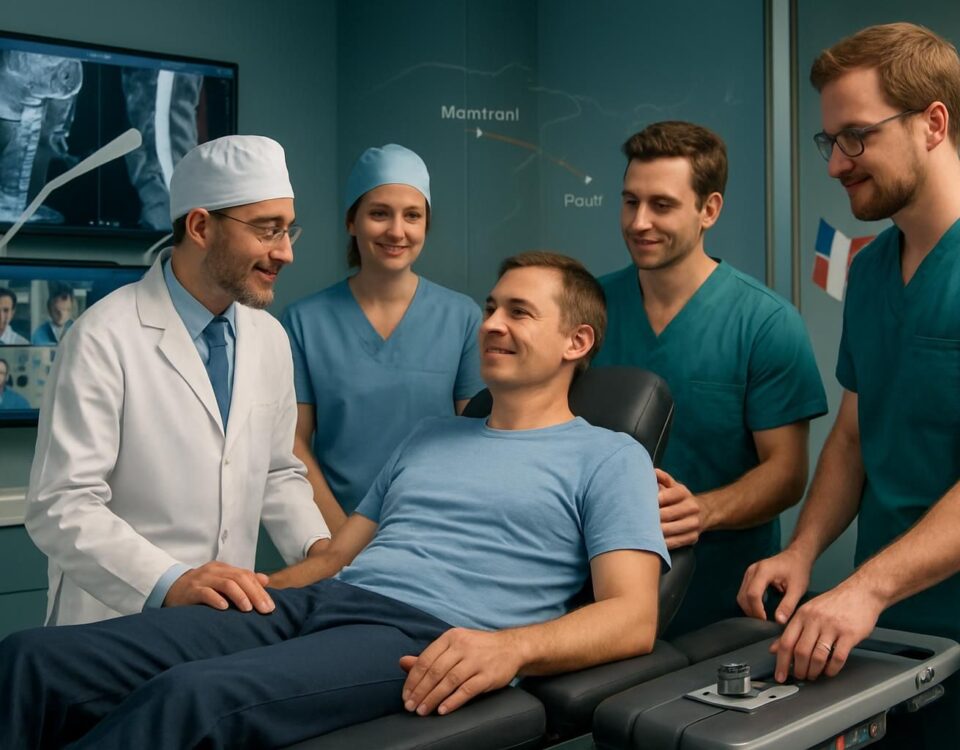

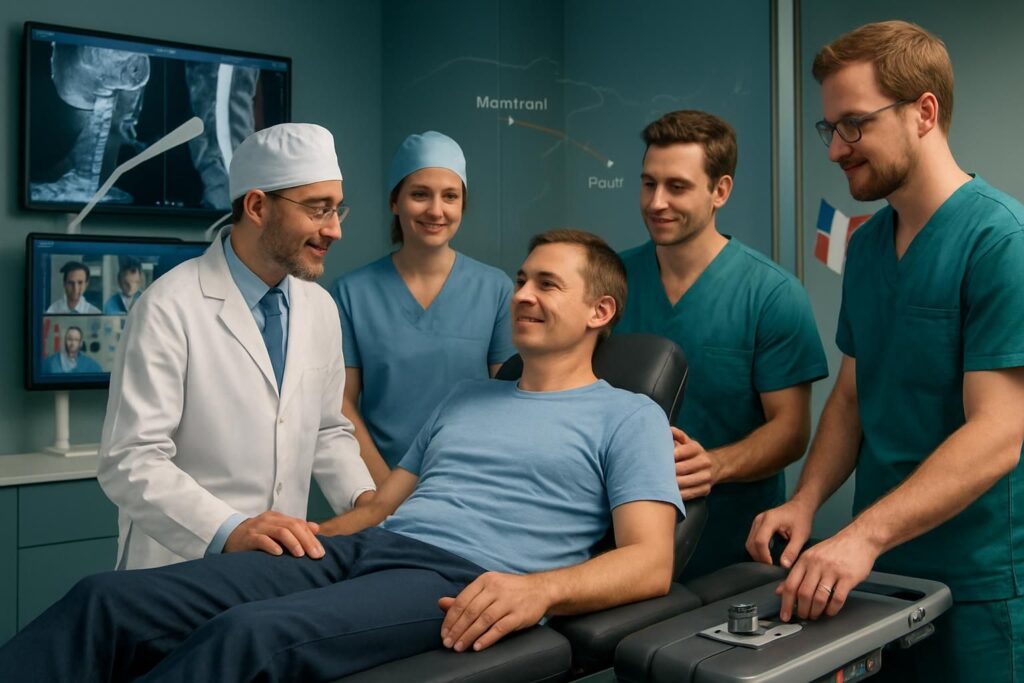
Décompression neurovertébrale pour la sciatalgie
20 novembre 2024
Décompression spinale : une révolution contre la douleur
20 novembre 2024
IN BRIEF In brief, neurovertebral decompression is an innovative solution to relieve sciatica caused by disc herniations or bulges. Available in Montreal, this non-surgical treatment alleviates pressure on the sciatic nerve while being non-invasive and pain-free. Through a complex series of traction, this method provides lasting relief, ideal for those seeking an alternative to medication and surgery. |
Neurovertebral decompression is a non-invasive treatment method aimed at relieving pain related to sciatica, often caused by compression of the nerve sciatic nerve. This technique, also known as vertebral decompression, uses a series of controlled traction applied to the spine to reduce pressure on the affected intervertebral discs. It is particularly effective in cases of disc herniations and disc bulges. Thanks to this treatment, many patients experience significant improvements in their well-being without resorting to surgery or pain medications.

The neurovertebral decompression is a painless, effective treatment for relieving pain related to sciatica. This technique focuses on nerve compression issues, due to herniated discs or disc bulges. Through traction applied to the spine, it aims to reduce pressure on the intervertebral discs and improve the patient’s well-being.
What is neurovertebral decompression?
Neurovertebral decompression is a non-invasive therapy that uses specially designed devices to create controlled traction on the spine. This method relieves pressure on the nerves and intervertebral discs. By facilitating the removal of compression, it helps to reduce pain and improve patient mobility.
Chirurgie mini-invasive à Longueuil : limiter la durée d’hospitalisation
La chirurgie mini-invasive du rachis représente en 2026 une véritable avancée pour les patients de Longueuil et du Québec, à la croisée de l’innovation technologique et de l’expertise clinique internationale. Ce type d’intervention, alliant précision et réduction du trauma, offre…
How does neurovertebral decompression help with sciatica?
Sciatica, often caused by irritation or compression of the sciatic nerve, can be very painful. Traditional treatments may include medications or physical therapies, but neurovertebral decompression offers an alternative that can effectively relieve pain. By releasing the compressed nerves, this treatment alleviates symptoms associated with this condition.
Arthrose et traction mécanique : différence avec la décompression avancée
Nombreuses sont les personnes à Montréal, Terrebonne et sur la Rive-Nord qui souffrent d’arthrose de la colonne vertébrale, une pathologie chronique génératrice de douleurs articulaires et de raideurs souvent invalidantes. Face à ces symptômes, plusieurs options thérapeutiques non invasives s’offrent…
The benefits of neurovertebral decompression
This technique offers several significant benefits. First, it is non-invasive, avoiding the risks associated with surgery. Secondly, it can be applied to a wide range of patients, even those who have not responded to other treatments. Additionally, it may contribute to the regeneration of intervertebral discs, promoting sustainable recovery.
Prothèse discale à Lévis : résultats rapides et durables
Dans un contexte où la douleur dorsale affecte la qualité de vie de milliers de Québécois, la prothèse discale à Lévis apparaît comme une avancée majeure dans la chirurgie du dos. Cette intervention innovante vise à offrir des résultats rapides…
Expected results
After several sessions of neurovertebral decompression, many patients report a decrease in pain and an improvement in their quality of life. Relief may vary from individual to individual, but this technique often indicates a noticeable improvement in symptoms. It is recommended to consult a professional for appropriate follow-up tailored to each specific case.
For more information on relieving sciatica through neurovertebral decompression, you can visit specialized websites online.
Relieved through neurovertebral decompression
Treatment of the sciatic nerve
Medical disclaimer: The information and advice provided on this site do not replace the opinion, diagnosis, or treatment of a healthcare professional. Please note that Dr. Sylvain Desforges, osteopath, is neither a medical doctor nor a physician, and is not a specialist in a medical specialty as defined by the College of Physicians of Quebec. Manual therapy, functional medicine, and sports medicine, as described on this site, exclude any treatment or medical diagnosis made by a medical doctor or specialist. Always consult your physician for any medical questions. For more details, please read our full Legal Notice.
- Neurovertebral decompression: non-invasive technique for treating sciatica.
- Relief: reduction of sciatic pain through spinal traction.
- Disc herniations: effective for sciatica caused by herniated or bulging discs.
- Natural approach: alternative to medications and surgery.
- Personalized sessions: each treatment is tailored to the patient’s specific needs.
- Regular follow-up: ongoing evaluation of treatment effectiveness for potential adjustments.
- Advanced technology: modern equipment to maximize results.
- Certified practitioners: treatments performed by qualified professionals.

IntraSPINE® à Laval : intervention rapide et sécuritaire
Dans un contexte où les douleurs lombaires chroniques représentent un défi majeur pour de nombreux patients actifs, l’implant IntraSPINE se positionne comme une avancée décisive en orthopédie. Cette innovation technologique, désormais accessible à Laval, propose une intervention rapide et sécuritaire…
Introduction to Neurovertebral Decompression
Neurovertebral decompression is a non-invasive and effective approach for treating sciatica, a syndrome often caused by compression of the sciatic nerve. This treatment relies on traction techniques applied to the spine, allowing relief of pressure exerted on the intervertebral discs. In this article, we will explore the benefits and methods of this technique to help those suffering from sciatic pain regain their well-being.
Arthrose et organisation des tâches ménagères
Vivre avec l’arthrose de la colonne vertébrale, qu’elle soit lombaire ou cervicale, impacte de manière significative la gestion des tâches ménagères. Les douleurs articulaires chroniques associées à cette affection peuvent limiter votre mobilité, engendrer de la fatigue et augmenter le…
What is Sciatica?
Sciatica manifests as pain that radiates along the path of the sciatic nerve. This pain can be caused by several factors, such as disc herniations, disc bulges, or muscle tension. Affected individuals often experience sharp pain in the lower back that may extend down to the legs. Neurovertebral decompression appears as an interesting alternative to alleviate these symptoms without resorting to surgery.
Prothèse discale cervicale à Québec : éviter la perte de mouvement
Les douleurs cervicales chroniques bouleversent régulièrement le quotidien des Québécois, réduisant la mobilité et la qualité de vie. Face à ces enjeux, les solutions chirurgicales traditionnelles comme la fusion vertébrale, bien qu’efficaces, engendrent souvent une perte significative de mobilité et…
How Does Neurovertebral Decompression Work?
Neurovertebral decompression uses precise traction technology to perform controlled stretching of the spine. This process aims to create space between the vertebrae, thereby reducing pressure on the affected discs. By relieving pressure on the sciatic nerve, this method can help reduce pain, promote blood circulation, and improve patient mobility. Sessions are often tailored to meet each patient’s individual needs, considering pain intensity and medical history.
Prothèse discale à Lévis : innovation et récupération rapide
À Lévis, la prise en charge des douleurs discales et les pathologies du rachis font face à une véritable révolution grâce à une innovation médicale qui change la donne : la prothèse discale. Cette avancée chirurgicale permet d’offrir aux patients…
The Benefits of Neurovertebral Decompression
The main benefits of neurovertebral decompression include pain reduction without the need for medications or surgery. This non-invasive treatment is also associated with minimized recovery time, allowing patients to quickly return to their daily activities. Additionally, it can be used in conjunction with other treatments, such as physiotherapy, to maximize results.
Prothèse discale cervicale à Québec : préserver la flexibilité cervicale
Dans le contexte actuel du traitement des pathologies cervicales sévères, la prothèse discale cervicale se positionne comme une avancée décisive offrant aux patients québécois une alternative précieuse pour préserver la mobilité naturelle de leur cou. Avec la montée constante des…
Who Can Benefit from Neurovertebral Decompression?
Any individual suffering from sciatica due to a disc herniation, a disc bulge, or other back pain may potentially benefit from this treatment. However, it is essential to consult a qualified healthcare professional to determine whether neurovertebral decompression is recommended for each specific case. Each treatment should be personalized, taking into consideration the overall health status and specifics of the pain.
What Results to Expect?
Many patients report a significant reduction in their pain after several sessions of neurovertebral decompression. Results may vary from person to person, depending on the severity of the condition and individual response to treatment. In general, regular follow-up and a holistic approach focused on physical well-being will help to sustainably improve sciatica symptoms.
In Summary
Neurovertebral decompression represents a promising alternative for patients suffering from sciatic pain. By addressing the root causes of pain without surgery, it offers an effective solution, minimizing discomfort while promoting recovery. For those living with sciatica, consulting a specialist could be a decisive step towards returning to an active and fulfilling life.
Comparison of Neurovertebral Decompression Methods for Sciatica
| Aspect | Details |
| Type of treatment | Non-invasive, no surgery |
| Indications | Disc herniation, disc bulge, sciatica |
| Mechanism of action | Controlled traction of the spine |
| Duration of treatment | Typical sessions of 30 to 60 minutes |
| Recommended frequency | 2 to 3 times per week |
| Side effects | Minimal, generally mild pain |
| Average cost | Variable depending on practitioner and region |
| Duration of results | May vary, often requires several sessions |
| Accessibility | Available in several specialized clinics |

Testimonials on Neurovertebral Decompression for Sciatica
I had suffered for several months from unbearable pain related to my sciatica. Visits to various doctors left me disappointed, as conventional treatments provided little relief. It was then that I discovered neurovertebral decompression, and to my surprise, after a few sessions, the pain began to subside. The targeted traction sessions on my spine really made a difference.
As an athlete, the onset of a disc herniation disrupted my training. I was skeptical about the neurovertebral decompression method, but my research convinced me to try it. Over the course of the sessions, I noticed a significant decrease in the pain in my lower back and an improvement in my mobility. I am now able to resume my sporting activities without pain.
After a serious injury, I developed sciatica that forced me to limit my daily activities. I was looking for a non-invasive method to treat my condition and opted for neurovertebral decompression. The results were remarkable: not only was I able to regain an acceptable level of comfort, but I also noticed an improvement in my quality of life. The gentle, targeted practices truly changed my perspective on treating chronic pain.
The neurovertebral decompression opened my eyes to the importance of a non-surgical treatment. After a few sessions, I was able to say goodbye to my persistent sciatic pain. Each appointment was conducted in a serene and calming atmosphere, which also aided my recovery. I highly recommend this method to anyone suffering from similar pain.
Neurovertebral decompression is a non-invasive treatment technique that effectively targets pain related to sciatica, a painful condition resulting from compression of the sciatic nerve. This method is based on well-defined mechanical and anatomical principles, allowing for the gradual relief of pressure exerted on intervertebral discs, often affected by herniations or bulges. Thanks to this approach, patients experience significant pain relief, promoting better quality of life and enhanced functional recovery.
Sciatica is often caused by a disc pathology, where the intervertebral disc loses its structural integrity, leading to a displacement of its internal content. When prolonged pressure is applied, this can lead to inflammation and radiating pain along the path of the sciatic nerve. Neurovertebral decompression is particularly effective in situations where pain is mechanically induced, allowing for the restoration of space between the vertebrae. Through a series of controlled tractions, the technique relieves nerve pressure, also promoting better blood circulation and tissue regeneration.
This treatment is based on a deep understanding of the mechanisms linked to the spine and neuropathic health. Decompression sessions are performed non-surgically, typically on a specialized table that is an integral part of neurovertebral decompression technology. The practitioner finely adjusts the force, direction, and rhythm of the tractions to achieve maximum effectiveness for each patient. The goal is to reduce pain intensity while improving mobility and functionality in the lumbar region.
In the field of care, many professionals, such as chiropractors and physical therapists, specialize in implementing neurovertebral decompression. These experts can also combine this technique with other complementary treatments, such as manual therapies, to achieve optimal results. The holistic approach to treating sciatica addresses not only the symptoms but also the underlying causes of pain, thus contributing to long-lasting healing.
Patient testimonials who have benefited from neurovertebral decompression often highlight a notable improvement in their condition, underscoring the method’s effectiveness in resolving chronic sciatica pain issues. This non-invasive treatment without medications also attracts attention from individuals preferring to avoid potentially risky surgical interventions. Thus, neurovertebral decompression emerges as a viable solution for those suffering from persistent pain associated with disc disorders.
This treatment, while relatively recent in the medical field, fits perfectly within the continuity of research and innovation in pain management. More and more clinics are adopting this approach, making it a leading option for relieving sciatica and improving patients’ quality of life. With proper application, neurovertebral decompression offers a natural and effective solution for many individuals experiencing the discomforts of back disorders.
Contribution of Pulse Align Neuromodulation Technology to Neurovertebral Decompression for Sciatica
Mechanism of Action
The Pulse Align technology relies on using gentle impulse vibrations aimed at stimulating type 2 mechanoreceptors. This process promotes a return to a natural state of muscle balance and tone. By activating these receptors, Pulse Align can enhance blood circulation and reduce muscle tension, thereby allowing the muscles to work optimally. This action, complementary to neurovertebral decompression, can be beneficial for patients suffering from sciatica, enabling a better response from the muscles surrounding the spine.
Specific Benefits
By integrating Pulse Align into a treatment program, patients can benefit from a non-invasive approach that effectively reduces pain and improves muscle function as well as mobility. The gentle vibrations allow for a reduction in pain associated with sciatica by decreasing muscle tension and promoting tissue relaxation. Additionally, this can also accelerate the recovery process, allowing individuals to return to normal activity more quickly without resorting to medications with harmful side effects or invasive procedures.
Comparison with Other Treatments
When comparing Pulse Align to other therapies for treating sciatica, it is crucial to highlight its unique approach. Unlike some methods that may involve the use of medications or invasive treatments, Pulse Align stands out for its natural and painless character. This positions it as an attractive alternative for those hesitant about the risks associated with surgeries or who wish to avoid medication dependence. Patient feedback often indicates higher satisfaction related to this method, making sessions more comfortable and results more durable.
Case Studies or Testimonials
In various testimonies, several patients who turned to Pulse Align for sciatica report significant improvements. One patient, for example, indicated that thanks to the integration of these impulse vibrations into his treatment, he was able to notably reduce his pain and regain better mobility within a few weeks. Other testimonials highlight the comfort and effectiveness of the sessions, illustrating the positive results obtained through this innovative technology and its combined use with neurovertebral decompression.
The sciatic nerve tear is a common condition that can cause intense and debilitating pain. Traditional treatment methods often revolve around medications, exercises, or, in some cases, surgical intervention. However, neurovertebral decompression represents a promising non-invasive alternative. This treatment has proven effective in relieving pain caused by issues ranging from disc herniation to other spinal conditions.
Neurovertebral decompression is based on the principle of traction applied to the spine. This method aims to reduce pressure exerted on the intervertebral discs, especially in cases where pain is triggered by sciatica or compression of the sciatic nerve. By allowing increased space around the vertebrae, this treatment helps to decrease pain and promote blood circulation, aiding in healing.
Healthcare professionals, such as chiropractors, often recommend neurovertebral decompression for patients showing sciatic symptoms. This treatment is frequently combined with other techniques, such as manual medicine, to maximize results. Many individuals suffering from back pain and sciatica report a significant improvement in their quality of life and symptom reduction thanks to this method.
Recent advances in technology have refined the techniques of neurovertebral decompression. With treatments available in various cities, such as Paris and Geneva, there is increasing accessibility to this approach. For those looking to avoid surgical solutions, neurovertebral decompression stands as a viable alternative, guided by qualified professionals.
In summary, neurovertebral decompression offers hope to those suffering from pain due to sciatica or other disc disorders. Testimonials from individuals who have undergone this treatment highlight its effectiveness and ability to restore well-being without resorting to surgery. Therefore, for the majority of patients, it is essential to explore this option before considering more invasive solutions.
FAQ
Décompression neurovertébrale
Quels sont les bienfaits pour les sportifs utilisant la décompression neurovertébrale?
Elle aide à réduire la douleur et à accélérer la récupération après une blessure liée à la colonne.
La décompression neurovertébrale peut-elle traiter plusieurs niveaux de la colonne?
Oui, elle peut être ajustée pour cibler plusieurs zones en fonction des besoins du patient.
En quoi consiste la décompression vertébrale?
Elle consiste à étirer doucement la colonne vertébrale pour créer une pression négative, permettant au disque de se repositionner et de réduire les compressions nerveuses.
Combien de temps faut-il pour observer des résultats avec la décompression neurovertébrale?
Certains patients constatent une amélioration dès les premières séances, tandis que d’autres nécessitent plusieurs semaines de traitement.
La décompression vertébrale peut-elle être utilisée pour la sténose spinale?
Oui, elle peut soulager les symptômes de la sténose spinale en réduisant la compression nerveuse.
Quels sont les avantages à long terme de la décompression vertébrale?
Les avantages incluent une réduction durable de la douleur et une meilleure santé de la colonne vertébrale.
Combien de séances sont nécessaires pour un traitement de décompression?
Un programme typique comprend entre 15 et 25 séances, selon la gravité de la condition.
La décompression vertébrale peut-elle améliorer la qualité de vie?
Oui, en soulageant la douleur chronique, elle permet aux patients de retrouver une meilleure qualité de vie et des activités normales.
La décompression discale est-elle efficace pour les bombements discaux?
Oui, elle peut aider à réduire la pression sur les disques bombés, favorisant leur rétraction.
Quels sont les premiers signes indiquant un besoin de décompression discale?
Des douleurs persistantes, des engourdissements ou une perte de mobilité peuvent indiquer un besoin de traitement.
Combien coûte un traitement complet de décompression neurovertébrale?
Le coût varie selon la clinique et la durée du traitement, mais il reste souvent moins cher qu’une chirurgie.
La décompression neurovertébrale peut-elle prévenir une intervention chirurgicale?
Oui, elle est souvent utilisée comme alternative non chirurgicale pour traiter les affections de la colonne.
Qu’est-ce que la décompression neurovertébrale?
La décompression neurovertébrale est une thérapie non chirurgicale visant à réduire la pression sur les disques intervertébraux et les nerfs pour soulager la douleur.Puis-je pratiquer des activités sportives pendant le traitement?
Oui, mais il est important de consulter un professionnel pour adapter les activités selon votre condition.
Quels problèmes de dos peuvent être traités par la décompression discale?
Elle peut traiter les hernies discales, les bombements discaux, la sténose spinale et d’autres douleurs chroniques du dos.
Quels types de douleurs la décompression discale peut-elle soulager?
Elle peut soulager les douleurs cervicales, lombaires et les douleurs irradiantes.
Comment se déroule une séance typique de décompression neurovertébrale?
La séance commence par un positionnement confortable, suivi d’un étirement doux et progressif de la colonne vertébrale pour réduire la pression sur les disques.
Puis-je ressentir une amélioration dès la première séance?
Certaines personnes ressentent un soulagement dès la première séance, bien que les résultats varient selon les patients.
La décompression vertébrale est-elle adaptée aux adolescents?
Oui, si elle est recommandée par un professionnel de santé, elle peut être utilisée chez les adolescents.
Quels examens sont nécessaires avant de commencer un traitement de décompression?
Un examen clinique approfondi et des imageries comme une IRM ou une radiographie sont souvent nécessaires.
Références