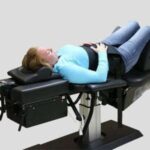
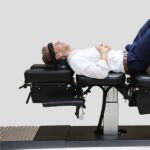
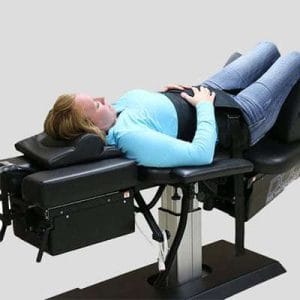
Neurovertebral decompression represents a remarkable advancement in the field of treating back pain and spinal disorders. This non-invasive technique is increasingly recognized for its effectiveness in relieving pain without resorting to more invasive methods such as surgery. Unlike traditional physical therapy, strengthening or stretching exercises, and chiropractic care, neurovertebral decompression specifically targets the intervertebral discs and affected nerves, providing a long-term relief solution for patients suffering from disc herniation, sciatica, and other spinal conditions.
Principles of Neurovertebral Decompression
Neurovertebral decompression works by applying a controlled traction force on the spine, which helps reduce pressure inside the intervertebral discs. This process promotes the movement of fluids, nutrients, and oxygen in the disc, facilitating healing and reducing inflammation. Through a personalized program, patients can experience significant pain relief and an improvement in their quality of life.
Unique Benefits of Neurovertebral Decompression
Sustained Pain Relief: Unlike temporary solutions, decompression offers potentially lasting relief by addressing the underlying cause of the pain.
Non-Invasive and Safe: This method eliminates the need for surgery and medication, thereby reducing the risks associated with these interventions.
Improvement of Spinal Function: By reducing pressure on the discs, nerves, and spinal structures can function more effectively, enhancing mobility and flexibility.
Reduction of Dependency on Medications: Many patients can reduce or eliminate their dependence on pain medications.
Personalized Treatment: Treatment plans are tailored to the specific needs of each patient, offering a more targeted approach.
Neurovertebral Decompression in Practice
Implementing neurovertebral decompression in a treatment plan requires a thorough assessment by a qualified healthcare professional. This assessment will determine if neurovertebral decompression is appropriate for the patient and customize the treatment to maximize results. The combination of decompression with manual medicine and the precision impactor can provide a synergy, accelerating the healing process and improving long-term outcomes.
Understanding Healing Mechanisms
The body’s ability to heal itself is at the core of neurovertebral decompression therapy. By creating space around the affected discs, this method stimulates the body’s natural healing process, allowing the discs to rehydrate, repair, and regenerate. This natural healing mechanism is crucial for restoring optimal spinal function without surgical intervention.
The Science Behind Decompression
Neurovertebral decompression is supported by scientific studies demonstrating its effectiveness in reducing intradiscal pressure. This pressure relief not only allows for immediate pain reduction but also promotes the healing of damaged discs in the long term. The precision of treatment, especially when combined with manual medicine and the use of precision impactors, allows for significant results even in cases where other treatments have failed.
Testimonials and Case Studies
Testimonials from patients who have benefited from neurovertebral decompression abound, offering insights into the possible life-changing transformations made possible by this therapy. Detailed case studies highlight notable improvements in terms of pain reduction, increased mobility, and decreased dependency on pain medications. These personal accounts serve as powerful validations of the effectiveness of neurovertebral decompression.
Patient Selection for Neurovertebral Decompression
Although neurovertebral decompression offers many advantages, it is not suitable for all patients. Careful selection is essential to identify ideal candidates. Criteria include, but are not limited to, the nature and duration of pain, medical history, and results from imaging studies. A thorough assessment ensures that the treatment is both safe and likely to be effective for the patient.
Integration with Other Forms of Manual Medicine
The effectiveness of decompression can be enhanced when integrated into a holistic treatment plan that includes manual medicine. Manual techniques can help realign body structures, improve circulation, and facilitate muscle relaxation, creating an optimal environment for healing. The precision impactor, in particular, is a tool that can be used to specifically target affected areas, promoting faster and more complete healing.
Treatment Optimization: Personalization and Monitoring
One of the keys to the success of neurovertebral decompression lies in the personalization of treatment. Each plan is carefully tailored to meet the specific needs of the patient, taking into account their health status, medical history, and recovery goals. This individualized approach ensures that each patient receives the optimal level of care.
The Crucial Role of Monitoring
Regular monitoring is essential to measure progress and adjust treatment as needed. Follow-up sessions help ensure that healing goals are being met and allow for adjustments based on the patient’s response to treatment. This dynamic process promotes faster and more effective healing, ensuring that the patient stays on the road to recovery.
Cutting-edge Technology in Neurovertebral Decompression
Neurovertebral decompression utilizes advanced technologies to provide precise and targeted treatments. State-of-the-art decompression machines are equipped with computerized systems that automatically adjust the force and angle of traction, optimizing results for each patient. This technological precision is complemented by the use of the precision impactor, which allows for targeted intervention on specific areas requiring attention.
Integration of Technological Innovations
The adoption of technological innovations in neurovertebral decompression treatment represents a significant advantage, allowing for real-time adjustments based on patient response. This capacity to customize treatment according to changing needs ensures a more effective and responsive therapeutic approach.
Maintaining Spinal Health After Treatment
Neurovertebral decompression is not just a short-term solution for pain; it is part of a long-term strategy for maintaining spinal health. After the conclusion of treatment, patients are often encouraged to adopt healthy lifestyle habits, including a balanced diet, regular physical activity, and correct posture practices to support the results achieved and prevent recurrences.
Tips for a Healthy Lifestyle
Healthcare professionals can provide personalized advice on lifestyle and specific recommendations to help patients maintain a healthy spine. This may include ergonomic techniques for work and home, adapted strengthening exercises, and stress management strategies to support overall well-being.
Patient Education and Empowerment
Patient education plays a crucial role in the success of neurovertebral decompression treatment. By understanding the underlying principles and expected benefits of treatment, patients are better equipped to actively engage in their healing journey. Practitioners dedicate time to explaining how decompression works, the steps of treatment, and how patient actions, such as postural adjustments and specific exercises, can enhance outcomes.
The Importance of Patient Empowerment
Furthermore, patient empowerment through education contributes to better pain management and an increased sense of control over their health. Informed patients are more likely to follow treatment recommendations and actively participate in their rehabilitation, increasing their chances of long-term success.
The Future of Neurovertebral Decompression
Neurovertebral decompression continues to evolve, with ongoing research to refine techniques and improve patient outcomes. The future promises the integration of even more advanced technologies, allowing for even more personalized and effective treatments. Moreover, interdisciplinary collaboration among various healthcare professionals, including manual medicine specialists and other therapists, will enrich the holistic approach to spinal healing.
Innovations and Future Research
Future research will likely focus on optimizing decompression parameters for various conditions, the effectiveness of specific treatment combinations, and the development of post-decompression rehabilitation protocols. The goal is to maximize healing, minimize recovery time, and improve patients’ long-term quality of life.
Conclusion
Neurovertebral decompression represents a significant advancement in the treatment of spinal disorders and back pain. By offering a non-invasive, safe, and effective treatment option, it has transformed the lives of many patients, allowing them to regain mobility and well-being. The emphasis on personalized treatment, the integration of advanced technology, and patient education and empowerment ensures that neurovertebral decompression will remain at the forefront of spinal care. As research continues to advance, the future of neurovertebral decompression looks promising, offering hope and healing to those suffering from chronic back pain.
Dans le contexte actuel de la santé au Québec, les douleurs cervicales représentent un défi quotidien pour nombre de patients dont la mobilité et le confort sont gravement affectés. La chirurgie du cou, longtemps connue pour entraîner une rigidité post-opératoire,…
Dans le domaine de la chirurgie du dos, la préservation de la mobilité rachidienne constitue un enjeu fondamental pour les patients souffrant de douleurs lombaires invalidantes. À Sherbrooke, la technologie IntraSPINE marque une avancée majeure en proposant une stabilisation dynamique…
La chirurgie du dos constitue une étape cruciale pour de nombreux patients souffrant de douleurs persistantes et invalidantes au niveau de la colonne vertébrale. À Trois-Rivières, cette réalité est au cœur des préoccupations des équipes de soins qui déploient des…
L’arthrose de la colonne vertébrale, qu’elle soit cervicale ou lombaire, est bien plus qu’un simple inconfort articulaire. Cette pathologie entraîne souvent des douleurs persistantes, une raideur difficile à supporter et une mobilité réduite qui peuvent altérer significativement la qualité de…
La chirurgie mini-invasive du rachis représente en 2026 une véritable avancée pour les patients de Longueuil et du Québec, à la croisée de l’innovation technologique et de l’expertise clinique internationale. Ce type d’intervention, alliant précision et réduction du trauma, offre…
Nombreuses sont les personnes à Montréal, Terrebonne et sur la Rive-Nord qui souffrent d’arthrose de la colonne vertébrale, une pathologie chronique génératrice de douleurs articulaires et de raideurs souvent invalidantes. Face à ces symptômes, plusieurs options thérapeutiques non invasives s’offrent…
Dans un contexte où la douleur dorsale affecte la qualité de vie de milliers de Québécois, la prothèse discale à Lévis apparaît comme une avancée majeure dans la chirurgie du dos. Cette intervention innovante vise à offrir des résultats rapides…
Dans un contexte où les douleurs lombaires chroniques représentent un défi majeur pour de nombreux patients actifs, l’implant IntraSPINE se positionne comme une avancée décisive en orthopédie. Cette innovation technologique, désormais accessible à Laval, propose une intervention rapide et sécuritaire…
FAQ
Décompression neurovertébrale
Quels sont les résultats à long terme de la décompression vertébrale?
Les résultats incluent une réduction durable de la douleur et une amélioration de la mobilité de la colonne vertébrale.
Quels sont les effets secondaires possibles de la décompression neurovertébrale?
Les effets secondaires sont rares, mais peuvent inclure une légère raideur ou sensibilité après une séance.
Quels sont les résultats attendus après un traitement de décompression vertébrale?
Les patients rapportent généralement une diminution de la douleur et une amélioration de leur qualité de vie.
Quels types de douleurs la décompression discale peut-elle soulager?
Elle peut soulager les douleurs cervicales, lombaires et les douleurs irradiantes.
La décompression neurovertébrale peut-elle éviter une chirurgie?
Oui, pour de nombreux patients, elle offre une alternative non chirurgicale efficace.
Quels sont les signes indiquant que la décompression neurovertébrale est efficace?
Les signes incluent une réduction de la douleur, une amélioration de la mobilité et une diminution des symptômes neurologiques comme les engourdissements.
Quels sont les bienfaits immédiats d’une séance de décompression neurovertébrale?
Un soulagement de la douleur et une sensation de relaxation sont souvent rapportés après une séance.
Quels sont les symptômes qui nécessitent une consultation pour la décompression neurovertébrale?
Des douleurs persistantes, des engourdissements, des picotements ou une perte de mobilité sont des symptômes qui justifient une consultation.
Combien de temps dure une séance de décompression discale?
Chaque séance dure généralement entre 15 et 30 minutes, selon le protocole personnalisé.
La décompression discale est-elle reconnue par les professionnels de santé?
Oui, elle est reconnue comme une méthode efficace pour traiter les affections de la colonne vertébrale.
La décompression neurovertébrale est-elle douloureuse?
Non, le traitement est généralement confortable et peut même être relaxant.
Qu’est-ce que la décompression neurovertébrale?
La décompression neurovertébrale est une thérapie non chirurgicale visant à réduire la pression sur les disques intervertébraux et les nerfs pour soulager la douleur.
Quels sont les risques de la décompression neurovertébrale?
Les risques sont faibles, mais certains patients peuvent ressentir une légère raideur temporaire après les séances.
La décompression vertébrale peut-elle prévenir d’autres problèmes de dos?
Oui, elle peut réduire la pression sur la colonne et prévenir les blessures futures.
Combien de temps faut-il pour observer des résultats avec la décompression neurovertébrale?
Certains patients constatent une amélioration dès les premières séances, tandis que d’autres nécessitent plusieurs semaines de traitement.
La décompression neurovertébrale peut-elle traiter plusieurs niveaux de la colonne?
Oui, elle peut être ajustée pour cibler plusieurs zones en fonction des besoins du patient.
Quels examens sont nécessaires avant de commencer un traitement de décompression?
Un examen clinique approfondi et des imageries comme une IRM ou une radiographie sont souvent nécessaires.
Quels sont les risques de ne pas traiter une condition nécessitant une décompression discale?
Sans traitement, les conditions peuvent s’aggraver, entraînant des douleurs chroniques ou des complications neurologiques.
Quels sont les avantages à long terme de la décompression vertébrale?
Les avantages incluent une réduction durable de la douleur et une meilleure santé de la colonne vertébrale.
Quels examens permettent de déterminer l’éligibilité à la décompression?
Une consultation clinique et des examens d’imagerie comme l’IRM sont nécessaires pour déterminer l’éligibilité.
Wong, L. K., Luo, Z., Kurusu, N., & Fujino, K. (2013). Cervical spine simulation model for traction therapy analysis. Proceedings of the 2013 IEEE/SICE International Symposium on System Integration, 516–520. https://ieeexplore.ieee.org/abstract/document/6776747/
Vanti, C., Saccardo, K., Panizzolo, A., Turone, L., Guccione, A. A., & Pillastrini, P. (2023). The effects of the addition of mechanical traction to physical therapy on low back pain? A systematic review with meta-analysis. Acta Orthopaedica et Traumatologica Turcica, 57(1), 3. https://www.ncbi.nlm.nih.gov/pmc/articles/PMC10151852/
Shahin, M. M., Ghazaly, A.-E. A.-H., Hasseb, A. E.-S. A., & Gomaa, B. M. (2024). Assessment of Spine MED® Traction Effect on Cervical Disc Herniation: Correlation Between MRI and ODI/VAS Score: A Randomized Study. Al-Azhar International Medical Journal, 5(3), 19. https://aimj.researchcommons.org/journal/vol5/iss3/19/
Dr. Sylvain Desforges, ostéopathe de renom, est le fondateur de TAGMED, un pionnier dans le domaine de la décompression neurovertébrale. Avec une expertise approfondie en médecine manuelle et naturopathie, il a consacré sa carrière à l'avancement des traitements non invasifs pour les troubles musculo-squelettiques. En tant que président et fondateur de l'association ACMA, Dr. Desforges s'engage à promouvoir les meilleures pratiques dans le domaine de la santé vertébrale. Sa passion pour l'amélioration du bien-être de ses patients se reflète dans son dévouement à l'innovation et à l'éducation, faisant de lui une figure respectée parmi ses pairs et ses patients.
Les informations et conseils fournis sur ce site ne remplacent pas l’avis, le diagnostic ou le traitement d’un professionnel de la santé. Veuillez noter que l’auteur de cet article n’est ni médecin ni spécialiste d’une spécialité médicale telle que définie par le Collège des médecins du Québec. La médecine manuelle, la médecine fonctionnelle et la médecine sportive telles que décrites sur ce site excluent tout traitement ou diagnostic médical posé par un médecin ou un spécialiste médical. Consultez toujours votre médecin pour toute question médicale. Pour plus de détails, veuillez lire notre Avis juridique complet.