In the realm of back and spinal care, neurovertebral decompression emerges as a promising solution for patients seeking relief without resorting to surgical interventions. When this technique is wisely combined with manual medicine, it opens a horizon of well-being and functional recovery for those suffering from chronic pain. This blog aims to unveil how the association of neurovertebral decompression with manual medicine practices and the use of a precision impactor can transform the therapeutic approach to spinal disorders.
Neurovertebral Decompression: A Revolution in Back Pain Treatment
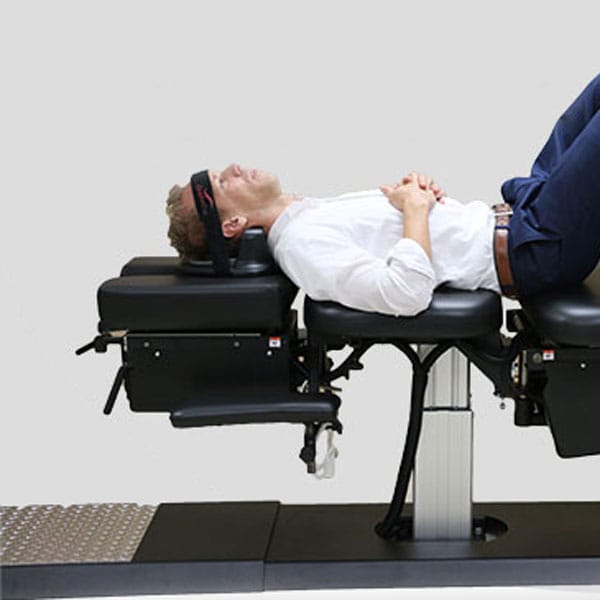
Neurovertebral decompression, with its non-invasive approach, offers an attractive alternative to traditional treatments for back pain and spinal disorders. This technique uses a specially designed table to apply gentle traction on the spine, which helps reduce intradiscal pressure. The benefits include decreased pressure on nerves, retraction of herniated discs, and improved circulation of fluids essential for tissue healing.
The Essence of Manual Medicine
Manual medicine, an ancient practice, relies on touch to diagnose and treat conditions. Through techniques such as manipulation, mobilization, and massage, it aims to restore mobility, relieve pain, and stimulate the body’s natural healing processes. When applied in conjunction with neurovertebral decompression, manual medicine can significantly enhance the treatment’s effectiveness, providing a more holistic and personalized approach for the patient.
Synergy with the Precision Impactor
The integration of the precision impactor into the neurovertebral decompression treatment adds an additional dimension to the therapy. This tool allows for precise and targeted adjustments that can improve spinal alignment and relieve muscle tension. The combination of these advanced techniques with manual medicine ensures a comprehensive approach, addressing both the structure and function of the musculoskeletal system.
Combined Benefits for Optimal Healing
Significant Pain Reduction
The combination of neurovertebral decompression with manual medicine offers a powerful synergy in the treatment of back pain and spinal disorders. Neurovertebral decompression specifically targets the intervertebral discs, reducing pressure and facilitating a return to a more natural and less painful state. When this technique is complemented by manual medicine, which works on the surrounding muscles, ligaments, and joints, pain relief is often deeper and more lasting than what could be achieved by a single method. Clinical studies have shown that patients treated with this combined approach report a significant reduction in their pain, with notable improvements from the very first sessions.
Improvement in Mobility and Flexibility
One of the most remarkable benefits of associating neurovertebral decompression with manual medicine is the improvement in mobility and flexibility. By relieving pressure on the discs and treating the muscular and joint structures with manual techniques, patients often experience a notable increase in their ability to perform movements that were previously painful or restricted. This improvement in mobility is crucial not only for daily well-being but also for preventing future injuries by maintaining a more supple and resilient spine.
Acceleration of the Healing Process
The combined approach of neurovertebral decompression and manual medicine accelerates the body’s natural healing process. Decompression helps restore proper alignment of the vertebrae and fosters an optimal healing environment for intervertebral discs, while manual medicine stimulates blood and lymphatic circulation, bringing nutrients and oxygen necessary for the repair of damaged tissues. Together, these methods facilitate a quicker recovery, allowing patients to return to an active and pain-free life more rapidly.
Testimonials and Case Studies
Success Stories
The profound impact of neurovertebral decompression combined with manual medicine is clearly reflected in the testimonials of patients who have experienced this therapeutic approach. For example, Jean, a 42-year-old man suffering from chronic lower back pain due to a herniated disc, saw remarkable improvement after just a few sessions. Before treatment, Jean had difficulty performing simple daily tasks without experiencing sharp pain. Thanks to a series of decompression and manual care sessions, he not only felt a significant reduction in his pain but also regained mobility he thought was lost. The precise adjustments and gentle manipulation worked in concert to restore the function of his spine, illustrating the power of this therapeutic combination.
Case Study Analysis
A case study published in the Journal of Clinical Orthopaedics and Research highlights the case of Clara, a 55-year-old woman struggling with severe sciatica for years. After exploring various treatment options with little success, Clara was treated with a combined approach of neurovertebral decompression and manual medicine. This treatment was strategically planned to target both the structural source of her pain and the contributing muscular conditions. During the study, Clara experienced a notable reduction in pain from the first week, with continuous improvements over time. The study concludes that this combined approach can offer an effective alternative for patients suffering from similar conditions, emphasizing the importance of addressing both structural and muscular aspects in the treatment of back pain.
Why Choose This Therapeutic Combination?
Comparison with Other Treatments
The uniqueness of combining neurovertebral decompression and manual medicine lies in its ability to provide a holistic and non-invasive solution for patients suffering from back pain and spinal disorders. Unlike more conventional approaches, such as surgery or pain medications, this method minimizes risks and side effects while addressing the underlying cause of pain. Surgery, for example, while effective in some cases, carries significant risks and often requires a long recovery period. Medications, on the other hand, can provide temporary pain relief but do not address the condition itself and may lead to dependence. By combining neurovertebral decompression with manual medicine, patients benefit from a treatment approach that is both safe and effective, aimed at restoring function without resorting to extreme measures.
Future Perspectives
The future of combining neurovertebral decompression with manual medicine looks promising, with ongoing research exploring new applications and enhancements of this treatment method. Technological innovations, particularly in the field of decompression, offer possibilities for further improving the efficiency and precision of treatments. Moreover, a deeper understanding of the underlying mechanisms of pain and vertebral healing could allow for even more personalized treatments to meet the specific needs of each patient. As the evidence base expands, it is likely that this combined approach will gain recognition and acceptance among healthcare professionals and patients.
Advice for Patients
For those considering this form of treatment, it is crucial to consult a qualified healthcare professional who has experience with both neurovertebral decompression and manual medicine. Openly discussing your medical conditions, expectations, and concerns can help develop a treatment plan that best suits you. It is also important to carefully follow your practitioner’s recommendations and engage in the healing process, understanding that recovery can vary from person to person.
Conclusion
By combining neurovertebral decompression with manual medicine, patients have access to a powerful and holistic therapeutic approach for the treatment of back pain and spinal disorders. This method offers a safe and effective alternative to conventional treatments, with the potential for lasting results and deep healing. By choosing this path, patients make an informed decision in favor of optimal spinal health and an improved quality of life.
Dans la région de Terrebonne, caractérisée par une population dynamique et active, l’arthrose de la colonne vertébrale demeure une cause majeure de douleurs et de limitations fonctionnelles. Cette affection dégénérative, qui touche notamment l’arthrose lombaire et cervicale, se manifeste par…
En bref : Décompression neurovertébrale : une technique non chirurgicale reconnue pour sa sécurité et son efficacité dans la prise en charge de l’arthrose de la colonne vertébrale.L’arthrose lombaire et l’arthrose cervicale provoquent douleurs, raideurs et limitations motrices qui impactent…
Souffrir d’une arthrose de la colonne vertébrale peut rapidement empiéter sur votre qualité de vie, surtout lorsque la douleur articulaire s’installe avec insistance. Sur la Rive-Nord, entre Montréal et Terrebonne, une approche novatrice s’impose face à cette condition chronique :…
Chaque année, un nombre croissant de personnes à Terrebonne et sur la Rive-Nord de Montréal font face aux difficultés engendrées par l’arthrose de la colonne vertébrale. Cette affection chronique, responsable de douleurs persistantes, d’une limitation progressive de la mobilité et…
Dans la région métropolitaine, les nombreux patients souffrant d’articulations douloureuses et raides trouvent un soulagement précieux grâce à une prise en charge rapide alliant expertise et technologies avancées. L’arthrose de la colonne vertébrale, notamment lombaire et cervicale, impacte considérablement la…
Dans un contexte où les douleurs dorsales chroniques touchent un nombre croissant de personnes à Montréal et Terrebonne, l’arthrose de la colonne vertébrale se révèle être un défi majeur en matière de mobilité et de qualité de vie. Ce trouble…
Dans un contexte où la prévalence des douleurs rachidiennes augmente sensiblement au Québec, les patients cherchent des solutions efficaces et accessibles face aux attentes souvent longues et aux coûts élevés des interventions classiques. La chirurgie mini-invasive à Longueuil s’impose comme…
L’arthrose de la colonne vertébrale représente un défi de santé majeur pour de nombreuses personnes vivant à Montréal, Terrebonne et sur la Rive-Nord. Cette affection se manifeste par la dégradation progressive du cartilage et l’apparition de douleurs chroniques, souvent associées…
FAQ
Décompression neurovertébrale
Combien coûte un traitement complet de décompression neurovertébrale?
Le coût varie selon la clinique et la durée du traitement, mais il reste souvent moins cher qu’une chirurgie.
Quels sont les signes indiquant une compression nerveuse nécessitant une décompression?
Une douleur irradiant dans les bras ou les jambes, des engourdissements ou une perte de force peuvent indiquer une compression nerveuse.
Puis-je ressentir une amélioration dès la première séance?
Certaines personnes ressentent un soulagement dès la première séance, bien que les résultats varient selon les patients.
Combien de temps les effets d’un traitement de décompression vertébrale durent-ils?
Les effets varient, mais une amélioration durable est souvent constatée avec un suivi approprié.
Quels sont les symptômes qui nécessitent une consultation pour la décompression neurovertébrale?
Des douleurs persistantes, des engourdissements, des picotements ou une perte de mobilité sont des symptômes qui justifient une consultation.
Quels types de disques peuvent être traités par la décompression neurovertébrale?
Les disques bombés, herniés ou dégénérés peuvent être traités efficacement par la décompression.
Quels sont les signes indiquant que la décompression neurovertébrale est efficace?
Les signes incluent une réduction de la douleur, une amélioration de la mobilité et une diminution des symptômes neurologiques comme les engourdissements.
La décompression neurovertébrale peut-elle éviter une chirurgie?
Oui, pour de nombreux patients, elle offre une alternative non chirurgicale efficace.
Quels sont les risques de la décompression neurovertébrale?
Les risques sont faibles, mais certains patients peuvent ressentir une légère raideur temporaire après les séances.
La décompression vertébrale peut-elle améliorer la qualité de vie?
Oui, en soulageant la douleur chronique, elle permet aux patients de retrouver une meilleure qualité de vie et des activités normales.
La décompression discale peut-elle traiter les douleurs irradiantes?
Oui, elle est efficace pour réduire les douleurs irradiantes causées par des compressions nerveuses.
Quels sont les premiers signes indiquant un besoin de décompression discale?
Des douleurs persistantes, des engourdissements ou une perte de mobilité peuvent indiquer un besoin de traitement.
Quels sont les résultats à long terme de la décompression vertébrale?
Les résultats incluent une réduction durable de la douleur et une amélioration de la mobilité de la colonne vertébrale.
La décompression neurovertébrale peut-elle traiter les douleurs chroniques?
Oui, elle est particulièrement efficace pour les douleurs chroniques causées par des affections vertébrales.
Quels sont les bienfaits immédiats d’une séance de décompression neurovertébrale?
Un soulagement de la douleur et une sensation de relaxation sont souvent rapportés après une séance.
Quels types de douleurs sont soulagées par la décompression discale?
Elle soulage les douleurs lombaires, cervicales et irradiantes causées par des compressions nerveuses ou des disques endommagés.
La décompression discale est-elle efficace pour les bombements discaux?
Oui, elle peut aider à réduire la pression sur les disques bombés, favorisant leur rétraction.
La décompression neurovertébrale peut-elle traiter plusieurs niveaux de la colonne?
Oui, elle peut être ajustée pour cibler plusieurs zones en fonction des besoins du patient.
Quels sont les bienfaits pour les sportifs utilisant la décompression neurovertébrale?
Elle aide à réduire la douleur et à accélérer la récupération après une blessure liée à la colonne.
Quels problèmes de dos peuvent être traités par la décompression discale?
Elle peut traiter les hernies discales, les bombements discaux, la sténose spinale et d’autres douleurs chroniques du dos.
Wong, L. K., Luo, Z., Kurusu, N., & Fujino, K. (2013). Cervical spine simulation model for traction therapy analysis. Proceedings of the 2013 IEEE/SICE International Symposium on System Integration, 516–520. https://ieeexplore.ieee.org/abstract/document/6776747/
Vanti, C., Saccardo, K., Panizzolo, A., Turone, L., Guccione, A. A., & Pillastrini, P. (2023). The effects of the addition of mechanical traction to physical therapy on low back pain? A systematic review with meta-analysis. Acta Orthopaedica et Traumatologica Turcica, 57(1), 3. https://www.ncbi.nlm.nih.gov/pmc/articles/PMC10151852/
Shahin, M. M., Ghazaly, A.-E. A.-H., Hasseb, A. E.-S. A., & Gomaa, B. M. (2024). Assessment of Spine MED® Traction Effect on Cervical Disc Herniation: Correlation Between MRI and ODI/VAS Score: A Randomized Study. Al-Azhar International Medical Journal, 5(3), 19. https://aimj.researchcommons.org/journal/vol5/iss3/19/
Dr. Sylvain Desforges, ostéopathe de renom, est le fondateur de TAGMED, un pionnier dans le domaine de la décompression neurovertébrale. Avec une expertise approfondie en médecine manuelle et naturopathie, il a consacré sa carrière à l'avancement des traitements non invasifs pour les troubles musculo-squelettiques. En tant que président et fondateur de l'association ACMA, Dr. Desforges s'engage à promouvoir les meilleures pratiques dans le domaine de la santé vertébrale. Sa passion pour l'amélioration du bien-être de ses patients se reflète dans son dévouement à l'innovation et à l'éducation, faisant de lui une figure respectée parmi ses pairs et ses patients.
Les informations et conseils fournis sur ce site ne remplacent pas l’avis, le diagnostic ou le traitement d’un professionnel de la santé. Veuillez noter que l’auteur de cet article n’est ni médecin ni spécialiste d’une spécialité médicale telle que définie par le Collège des médecins du Québec. La médecine manuelle, la médecine fonctionnelle et la médecine sportive telles que décrites sur ce site excluent tout traitement ou diagnostic médical posé par un médecin ou un spécialiste médical. Consultez toujours votre médecin pour toute question médicale. Pour plus de détails, veuillez lire notre Avis juridique complet.